
Find Michigan Dissolution Of Marriage Records
Michigan dissolution of marriage records are filed and maintained by the Family Division of the Circuit Court in each of the state's 83 counties. You can search case information online through the MiCOURT portal, request certified copies from the clerk's office in the county where the case was filed, or order a divorce certificate from the Michigan Department of Health and Human Services. This guide covers where to search, what records are available, how to request copies, and what Michigan law says about access to dissolution of marriage filings.
Michigan Dissolution Of Marriage Overview
Where to Find Michigan Dissolution Of Marriage Records
In Michigan, dissolution of marriage cases are handled by the Family Division of the Circuit Court. Each of the 83 counties has its own Circuit Court with a Family Division that keeps all divorce filings, stores the full case files, and provides copies to the public. The circuit court clerk is the main point of contact for divorce records. Staff can look up cases by name or case number and provide certified copies of the judgment of divorce, parenting plans, and settlement agreements.
Michigan also has a state-level source for dissolution of marriage records. The Michigan Department of Health and Human Services maintains vital records including divorce certificates from 1897 to the present. These certificates are a summary document, not the full court file. They list the date the divorce became final, the names of the parties, the court name, and the case number. To get the actual judgment of divorce with all its terms, you need to contact the Circuit Court Clerk in the county that handled the case.
The MDHHS vital records office is located at 333 S. Grand Avenue, 1st Floor, Lansing, MI 48933. You can reach them at (517) 335-8666, Monday through Friday, 8:00 AM to 5:00 PM. Visit michigan.gov MDHHS Vital Records to learn about ordering dissolution of marriage certificates online or by mail. Some divorces prior to 1924 may not be on file at the state office. Certificates are not issued until at least 90 days after the divorce date.
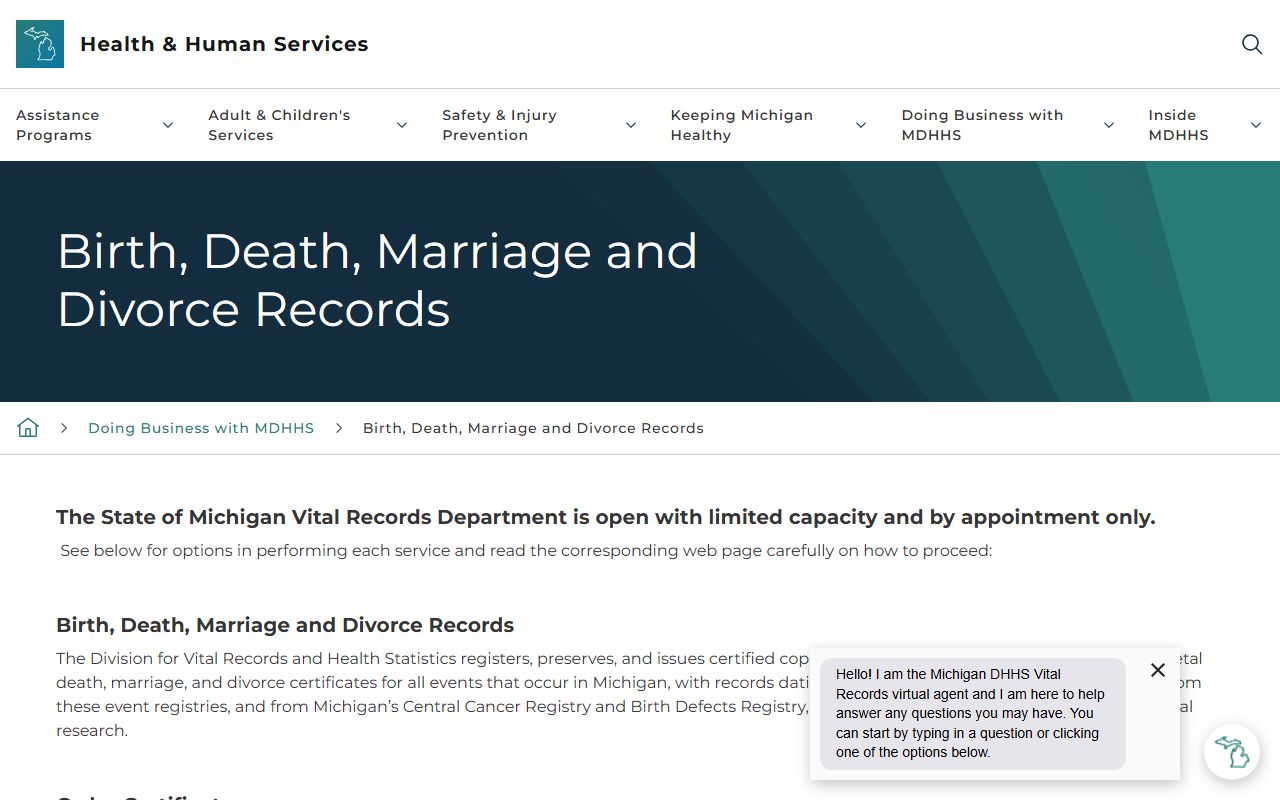
The MDHHS vital records office issues divorce certificates, not judgments. Certificates confirm that a dissolution of marriage occurred but do not include the full terms of the decree. They are available to anyone with no restrictions.
Search Michigan Dissolution Of Marriage Records Online
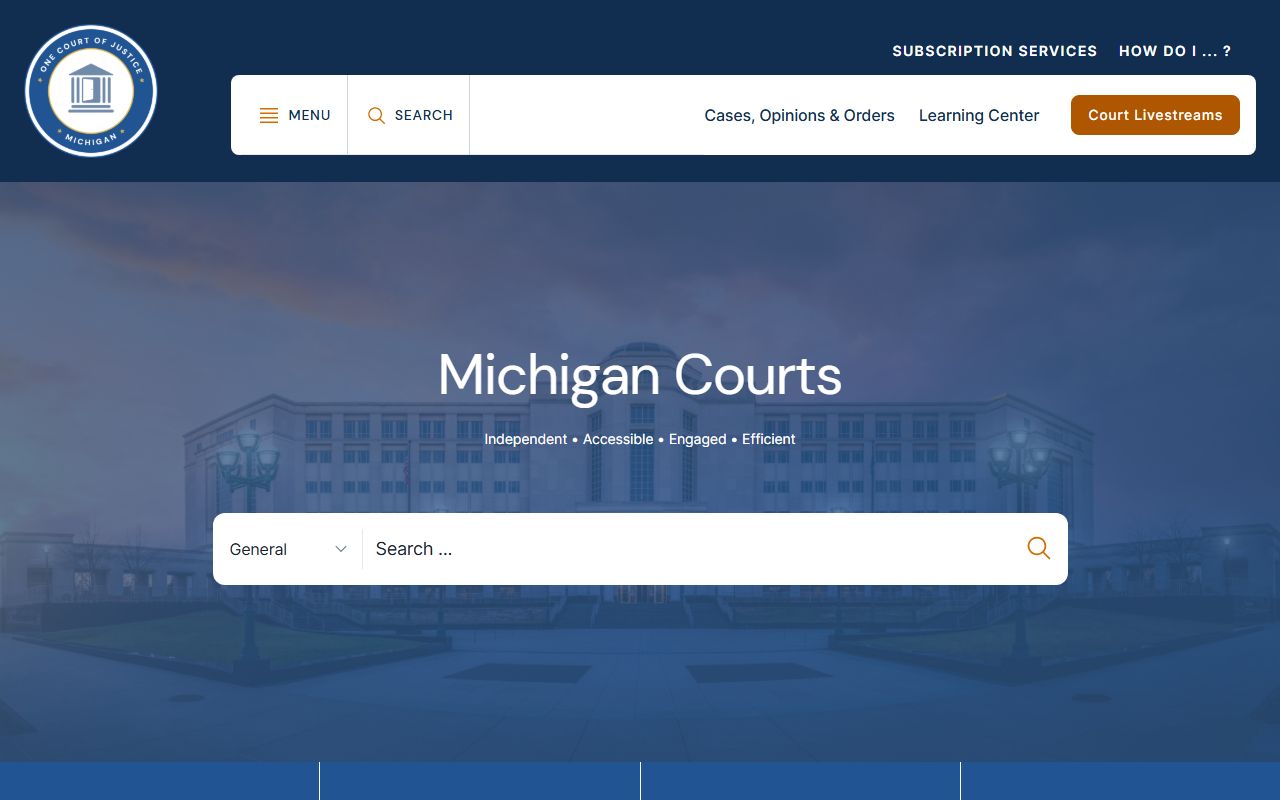
The MiCOURT Case Search portal is the main statewide tool for looking up dissolution of marriage records online. It is free and open to the public. You can search by party name, case number, or attorney bar number. The system shows case type, filing date, assigned judge, current status, and a register of actions listing all docket entries. Actual document text is not available online. You must contact the court clerk for copies of the actual documents.
When searching MiCOURT, dissolution of marriage cases appear under two code types. DM means divorce with minor children. DO means divorce without minor children. You can filter by these codes to narrow results. The system covers Circuit Court cases across Michigan, though older records may not be fully digitized. Sealed and confidential records are excluded from public search results.
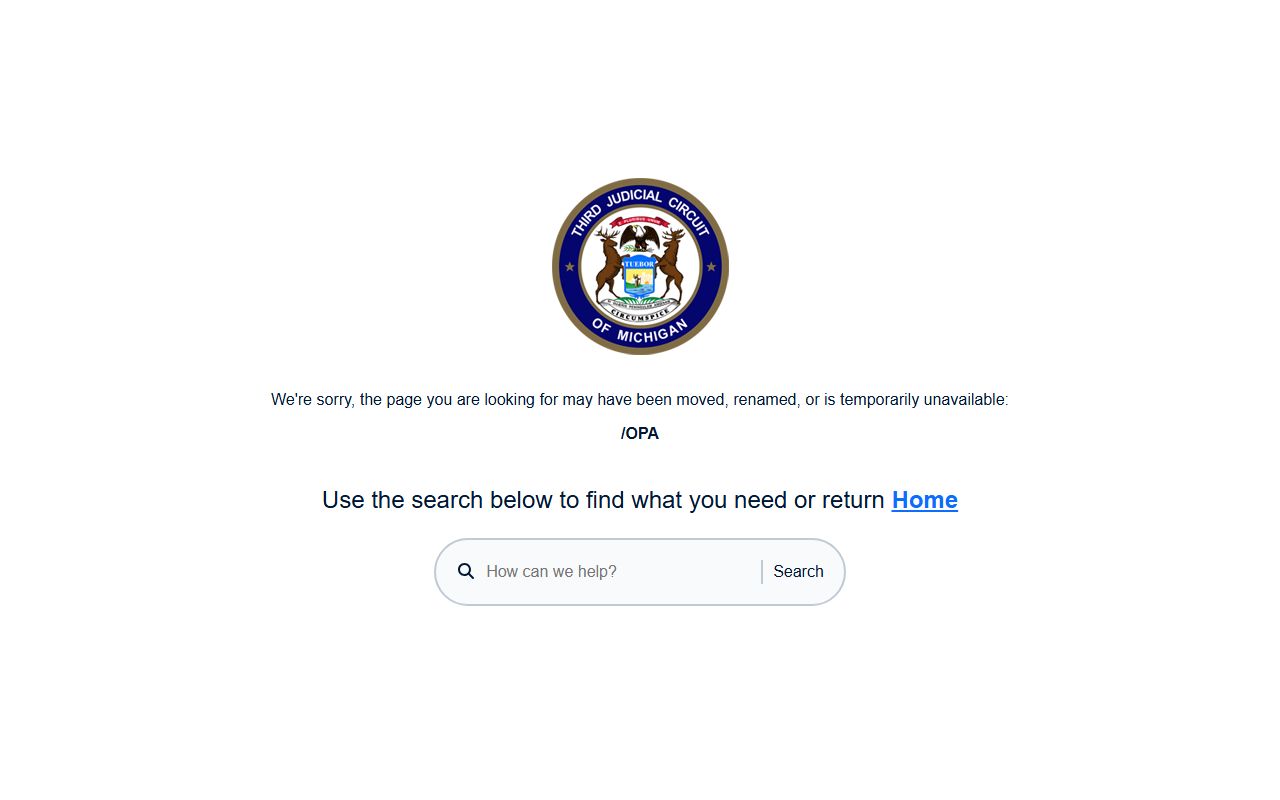
Wayne County has its own search system in addition to MiCOURT. The Odyssey Public Access system at 3rdcc.org/OPA covers civil court records including dissolution of marriage cases for Wayne County going back to 1942. You can search by date range, name, or case number. This system is run by the Third Judicial Circuit Court, which serves the Detroit area.
Other major counties have their own portals. Oakland County uses the Court Explorer at courtexplorer.oakgov.com. Kent County allows name searches through accesskent.com. Ingham County provides an online record search at courts.ingham.org. If your county does not have its own portal, MiCOURT is the primary option.
Types of Michigan Dissolution Of Marriage Records
There are two main types of dissolution of marriage records in Michigan. The first is the Judgment of Divorce. This is the court's final order ending the marriage. It lays out the terms for property division, spousal support, child custody, parenting time, and child support. The judgment is signed by the judge and becomes part of the permanent case file at the Circuit Court Clerk's office. Certified copies of the judgment are the official proof of divorce and are needed for legal name changes, remarriage, insurance adjustments, and other purposes requiring documentation.
The second type is the Divorce Certificate issued by MDHHS. It is a shorter summary vital record that confirms the basic facts: that the dissolution of marriage occurred, when it happened, who was involved, and which court handled it. Many people only need a certificate for routine purposes such as verifying marital status. The certificate is available to anyone, with no restrictions on who can order it.
Full dissolution of marriage case files contain much more than just the judgment. They can include the complaint for divorce, summons, verified statement (required when children are involved), financial affidavits, parenting time orders, child support orders, property settlement agreements, and all motions filed during the case. Michigan Court Rule MCR 3.206 specifies exactly what a divorce complaint must contain. Financial disclosures in the file may have limited access under MCR 8.119. You can request access to the full case file at the Circuit Court Clerk's office in the county where the case was filed.
Michigan uses specific case type codes in its court system. Knowing these helps when searching MiCOURT or other case lookup tools. The main codes for dissolution of marriage are DM for cases with minor children and DO for cases without minor children. DS covers separate maintenance cases. Understanding these codes makes searching faster and more accurate.
Michigan Dissolution Of Marriage Law
Michigan has been a no-fault divorce state since January 1, 1972. Under MCL 552.6, the only ground for dissolution of marriage is that there has been a breakdown of the marriage relationship to the extent that the objects of matrimony have been destroyed and there remains no reasonable likelihood that the marriage can be preserved. You do not need to prove fault, adultery, or wrongdoing to file.
Residency rules come from MCL 552.9. One party must have lived in Michigan for at least 180 days immediately before filing. One party must also have resided in the county where the case is filed for at least 10 days right before filing. These are hard jurisdictional requirements. They cannot be waived by agreement. There is a limited exception when the other party is a citizen of a foreign country and minor children may be at risk of being taken abroad.
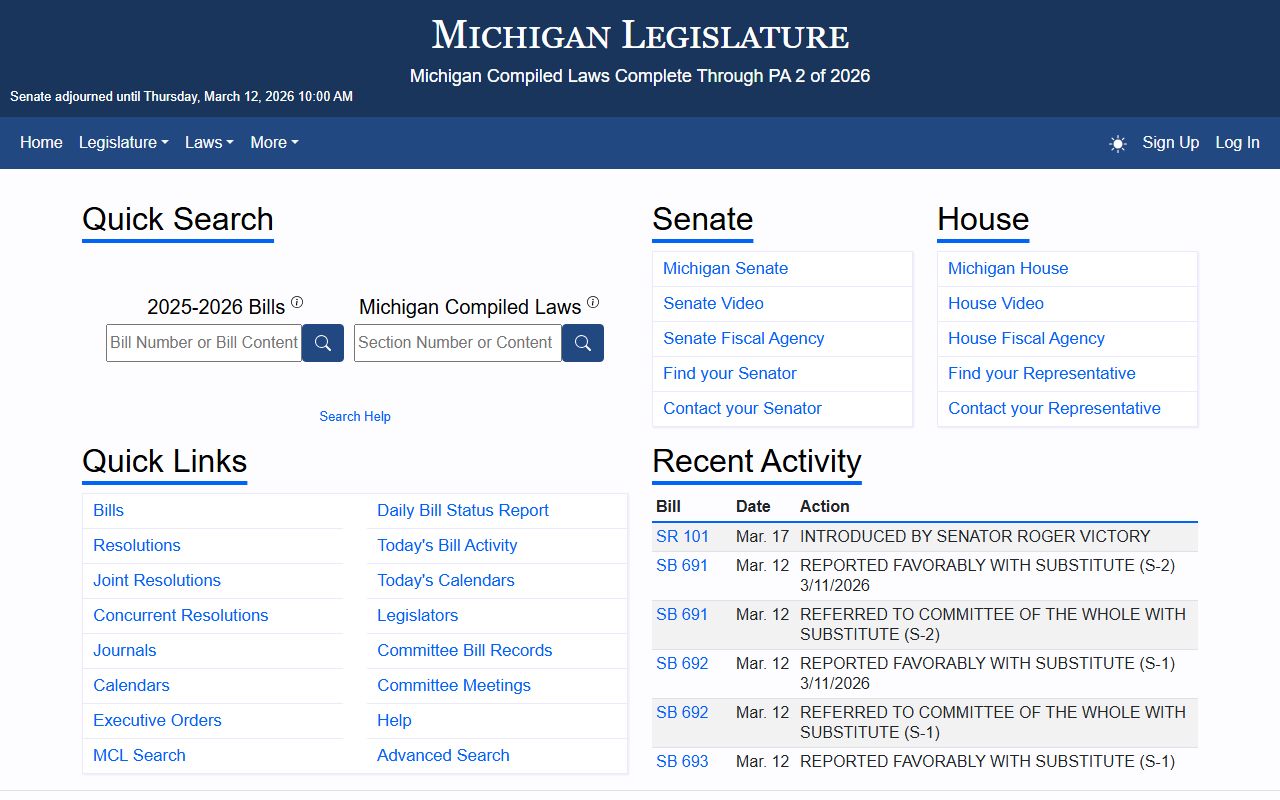
Waiting periods are set by MCL 552.9f. Cases without minor children must wait at least 60 days from filing before the court can grant the divorce. Cases with minor children require a minimum wait of 180 days, which is six full months. These waiting periods are statutory. No agreement between the parties can shorten them. Property division falls under MCL 552.19, which gives the court authority to divide both real and personal property. Spousal support rules are in MCL 552.23, which also allows the court to reach a spouse's separate property if marital assets are not enough for suitable support.
Michigan courts follow MCR 3.211, which requires the judgment of divorce to address the division of all real and personal property, all debts, life insurance beneficiary interests, and any pension, annuity, or retirement benefits. Judgments that do not address these items can be challenged later. The Michigan Courts website provides standardized forms used statewide.
Dissolution Of Marriage Fees in Michigan
Filing fees for a dissolution of marriage vary by county and by whether children are involved. As a general statewide range, a divorce without minor children costs around $175 to file. A divorce with minor children typically runs $255. Some counties add administrative fees on top of the base filing fee. Wayne County has higher fees, with a base filing fee of $421. Macomb County charges $255 with children and $175 without children. Ingham County charges $255 with children ($150 filing fee plus $80 FOC fee plus $25 electronic service fee) and $175 without children.
MDHHS divorce certificate fees are uniform statewide. A certified copy by mail costs $34. Additional copies ordered at the same time cost $16 each. Rush processing adds $12. Ordering online or by phone costs $58.50 per certified copy. These are MDHHS fees only and separate from what the court charges for copies of the actual judgment.
Copy fees at the Circuit Court Clerk's office vary by county. Most counties charge $1 to $2 per page for regular copies, with a certification fee of $10 to $15 per document. Wayne County charges $2 per page. Kent County charges $15 for certified copies plus a convenience fee. Fee waivers are available for low-income filers through an affidavit of indigency filed with the court.
Note: Filing fees change periodically. Contact the Circuit Court Clerk in the county where you plan to file to confirm current costs before submitting your case.
Are Dissolution Of Marriage Records Public in Michigan
Yes. Michigan dissolution of marriage records are public under MCR 8.119, which governs public access to all court records. The rule states that court records are accessible to anyone by default. You do not need to be a party to the case. You do not need to explain your reason for requesting records. Most documents in a divorce case file are available to anyone who asks at the Circuit Court Clerk's office in person or by mail.
Some specific types of information are protected. Under MCR 8.119, Social Security numbers, financial account numbers, driver's license numbers, and certain details about minor children are restricted from public viewing. Financial disclosures and domestic violence-related safeguards also receive special protection. A party can ask the court to seal specific records by filing a motion and showing good cause. The court weighs privacy interests against the public interest in open records. Full case seals are uncommon. Partial redactions are more typical when sensitive financial or personal information needs protection.
Divorce certificates issued by MDHHS cannot be sealed. They are treated as vital records and remain available to the public regardless of any court sealing order on the underlying case file.
Legal Help for Dissolution Of Marriage in Michigan
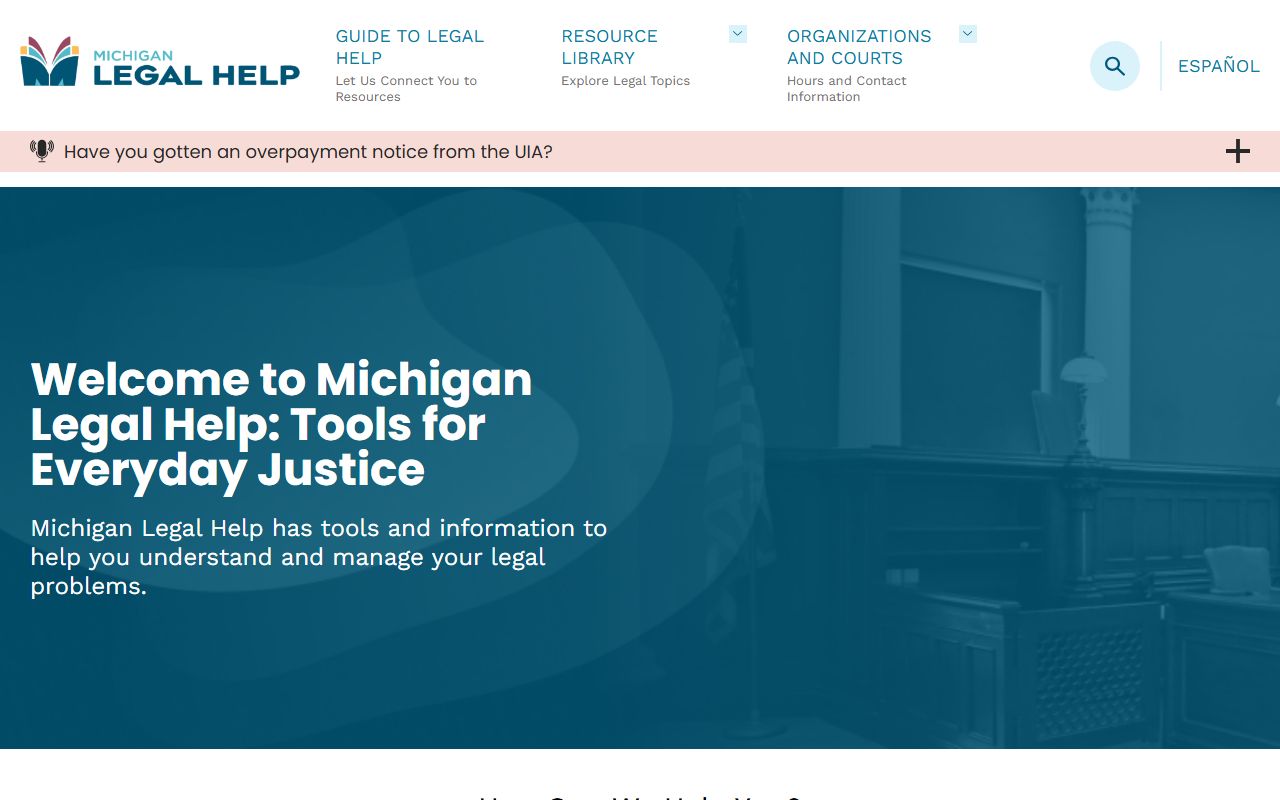
Michigan has several free and reduced-cost resources for people going through a dissolution of marriage. Michigan Legal Help is the state's main self-help legal site. It has step-by-step guides, court forms, and plain-language explanations of Michigan family law. The site covers every stage of the divorce process from filing to finalizing the judgment. It is run through a collaboration of legal aid organizations and the State Bar of Michigan.
The Michigan Courts website has standardized court forms, contact information for each county court, and links to local legal resources. The State Court Administrative Office (SCAO) provides forms used in all Michigan counties and can be reached at (517) 373-1263. Every Michigan county also has a Friend of the Court (FOC) office associated with the Circuit Court. The FOC calculates child support using the Michigan Child Support Formula, investigates custody disputes, enforces support orders, and provides mediation. If your dissolution of marriage case involves children, the FOC plays a central role in your case from start to finish.
Browse Michigan Dissolution Of Marriage Records by County
Each county in Michigan has its own Circuit Court Family Division that maintains dissolution of marriage records. Pick a county below to find local court contact info, filing details, and search options.
Dissolution Of Marriage Records in Major Michigan Cities
Michigan residents file for dissolution of marriage at the Circuit Court for the county where they live. Pick a city below to find courthouse info, contact details, and local search resources.